Super Simple Songs from Birth to 19 Months — A Real-Life Journey
A mom shares her real Super Simple Songs journey from birth to 19 months. Milestones, routines, and honest tips for bilingual-friendly babies.
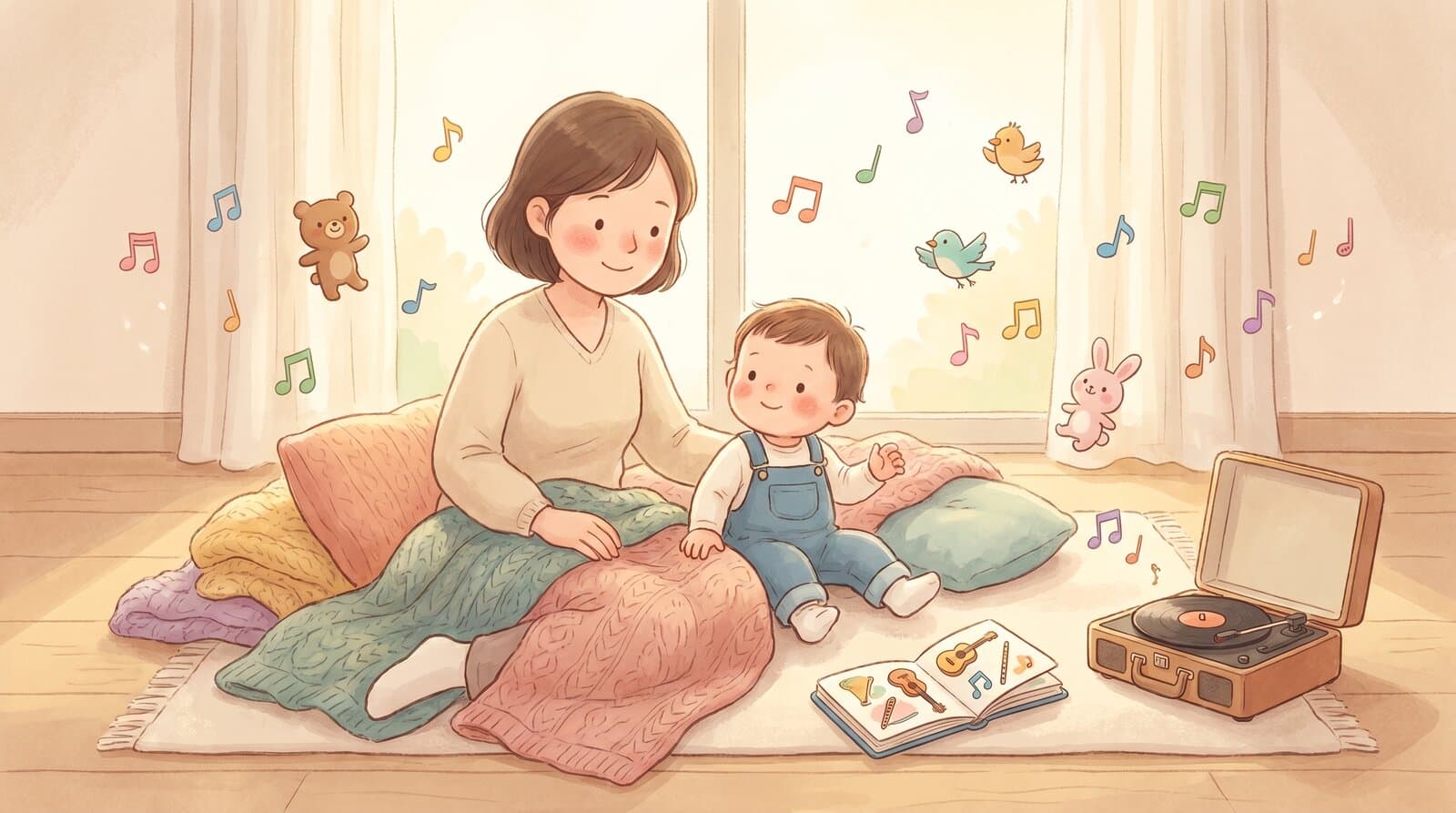
I am not a native English speaker, but I wanted to give my baby a gentle head start on English. So from the very first month, I started playing Super Simple Songs in the background. No flashcards, no forced lessons — just songs.
Now my daughter is 19 months old. She loves music in general, but Super Simple Songs are on another level. She has no resistance to English, follows many daily routines through song, and clearly understands dozens of simple English phrases and commands.
Here is exactly what we did, month by month, and what I learned along the way.
Our daily listening routine
2-5 months: stroller walks + simple songs
During daily walks I played SSS playlists on shuffle. The songs are short and repetitive, so I naturally learned the melodies and could hum them. I was surprised how quickly they stuck in my head — and that meant they were sticking in hers too.
2 months onward: morning wake-up playlist
Every morning during diaper changes, washing up, and tummy time I played our “good morning” songs. She stopped crying during wake-up routines and started kicking her legs to the rhythm during tummy time.
5 months onward: I added simple actions
By now I had learned the motions for many songs. I would dance and gesture while we walked or played at home. She watched me closely. Sometimes she would laugh, sometimes she would just stare — but she was clearly paying attention.
6 months: lyric book + pointing
We introduced a simple lyric book with pictures. At first I pointed while we listened. By 12 months she could point to the pictures herself. Now she will happily sit with the book for 20-30 minutes, turning pages and pointing. We never travel without it.
6 months onward: morning weather routine
Every morning after opening the curtains we sang Good Morning, Mr. Rooster and How’s the Weather? Now, at 19 months, she pulls me to the window in the morning and waits for me to open the curtains. She connects the song to the real world.
7 months onward: mealtime + brushing teeth
Before and after meals we sang Are You Hungry?, This Is the Way, and Brush Your Teeth. Brushing teeth after meals used to be a battle for many parents I know; for us it became just another song cue. She opens her mouth without protest.
8 months: the most music-sensitive baby in class
At her early-education class, the teachers noticed her immediately. When music started, she was the first to respond — clapping, bouncing, turning toward the sound.
10 months onward: she started asking for music
When we are in the car or stroller, she makes an “mmm-mmm” sound and points to the speaker. If I play other music, she listens for a moment. If I play Super Simple Songs, she goes quiet and still right away. We keep four big playlists on shuffle and do not limit the songs.
12 months onward: matching songs to pictures and actions
She can now flip to any page in the lyric book and we will sing that song together. I point at the pictures, I do the actions, and she copies. She learns new motions after just a few repetitions.
8 months onward: open to English books and cards
Because English had always been part of play, not “study,” she accepted English picture books and vocabulary cards without any pushback. She will sit, look, and listen.
What I learned after 19 months
-
Do not stress about the playlist. Almost every Super Simple Song is simple enough that an adult can learn it quickly. As you listen together, you will naturally pick up songs and become the “live version” your baby needs for understandable input.
-
Do not worry whether your baby understands every word. Building a love for the language matters more than perfect comprehension at first. With your gestures, facial expressions, and daily routines, understanding comes naturally.
-
Do not force a fixed study time. Quiet listening moments work best — during diaper changes, meals, car rides, or before bed. I avoid playing music while she is deeply focused on independent play.
-
Do not limit yourself to one song for weeks. Acquisition beats drilling. A broad, relaxed listening diet helps children absorb patterns, vocabulary, and pronunciation without pressure.
-
Do not compare your child to milestones charts. When I visited bilingual daycares, I realized many of them use the same SSS songs with older toddlers. Because we started from birth, we had already built months of friendly familiarity without any formal instruction.
If you are just starting
You do not need to be fluent. You do not need a curriculum. You just need:
- A playlist of Super Simple Songs.
- A few daily moments where English songs become part of the routine.
- A willingness to look silly singing and doing actions.
Your baby will not judge your accent. They will love your voice, your movements, and the attention. That is the real foundation of early bilingual listening.
Songs that worked best for us
- Good Morning, Mr. Rooster — morning routine
- How’s the Weather? — looking out the window
- Are You Hungry? — mealtime
- This Is the Way — washing hands, getting dressed
- Brush Your Teeth — after meals
- The four main SSS compilations — car rides and stroller walks
If you are on the fence about starting early, our experience is clear: the earlier the songs feel like part of normal life, the more natural English becomes for your child.
Free Super Simple Songs resources
- SSS 30 Best Songs for Beginners — a free printable two-stage song list for English listening beginners.
- Free 4-Week Super Simple Songs Morning Routine — weekly plan + daily checklist.
- Free Printable TPR Action Cards — movement cards for action songs.
- How We Made Super Simple Songs Actually Work in 4 Months — the watch-listen-review-use routine.
Get a personalized AI plan
Want a custom Super Simple Songs routine for your baby or toddler? Our AI builds a weekly plan based on age, language background, and daily schedule.
Get a free AI Super Simple Songs plan
Tell us your child's age, language, and goals. Our AI builds a weekly routine with the right songs, activities, and printable ideas in under a minute.
Create My Free Plan