Can You Teach English With SSS If You're Not a Native Speaker?
Worried your English isn't good enough to teach your child with Super Simple Songs? A non-native parent's honest playbook — accent, translation, and TPR tips.
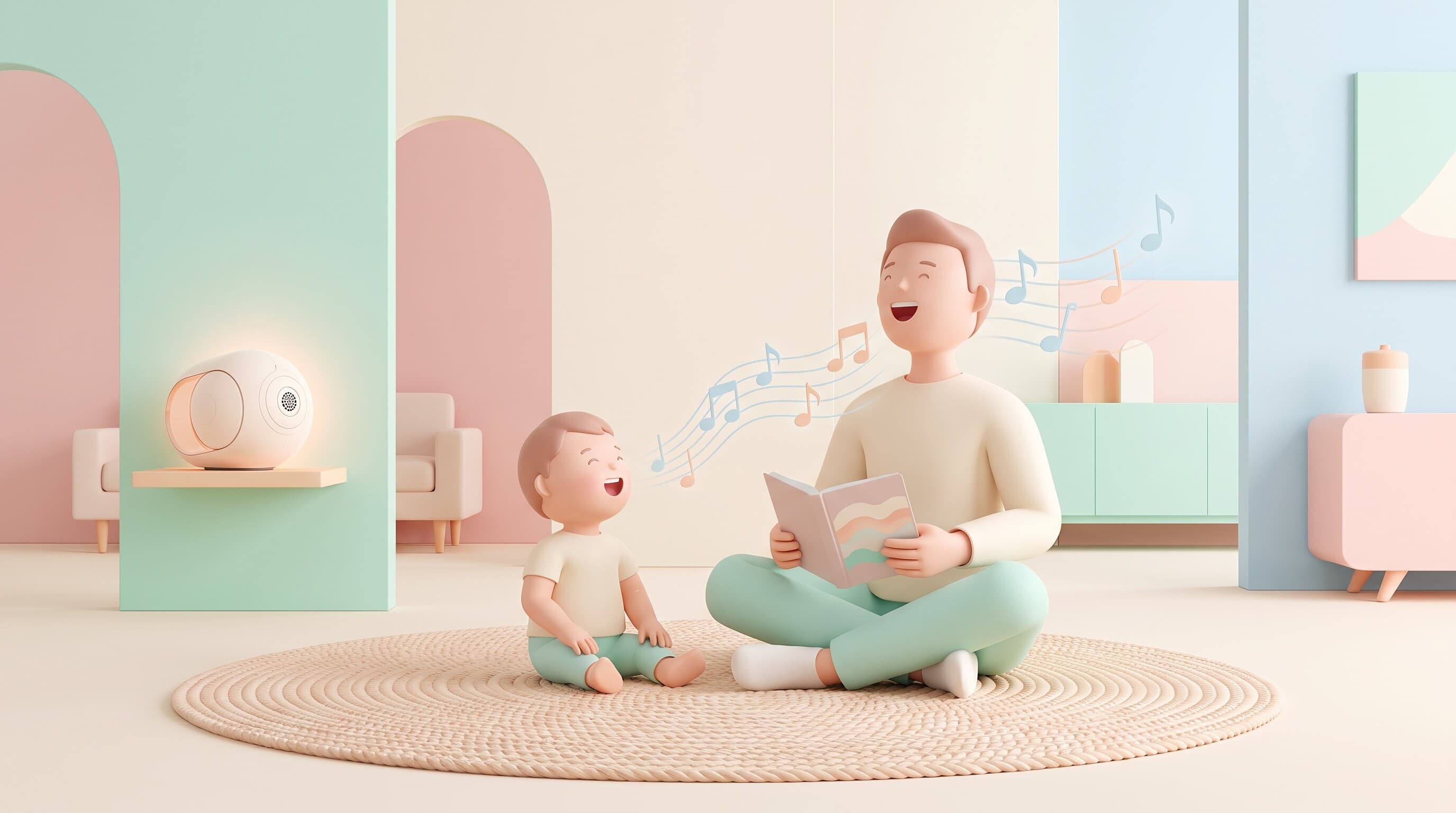
I am not a native English speaker. When I first started playing Super Simple Songs for my child, the voice in my head was loud: My accent is terrible. I can't sing these songs properly. What if I teach her the wrong pronunciation?
If that voice sounds familiar, here is the short answer.
Yes, you can absolutely teach your child English with Super Simple Songs as a non-native speaker — and in one important way, you have an advantage over native-speaking parents.
Here is the honest playbook, built from two years of doing exactly this.
First, a mindset shift: you are not the teacher
This is the mistake almost every non-native parent makes. We assume the parent is the teacher and the child is the student. So we panic about our accent, our vocabulary, our grammar.
But with songs, the roles are different:
- The song is the teacher. It supplies the correct pronunciation, the vocabulary, and the repetition.
- You are the companion. You supply the actions, the routine, and the emotional connection.
Your child learns pronunciation from the recording. They learn that language is worth paying attention to from you. A parent who looks silly and engaged will always beat a perfectly pronounced recording playing in the background.
Your accent is not the problem you think it is
Your baby will not judge your accent. They will love your voice, your movements, and the attention.
Think about how bilingual children actually develop: their pronunciation model comes from the audio they hear most — songs, videos, stories — not from their parents' occasional imperfect words. Your imperfect "wheels on the bus" does not overwrite the hundreds of times they hear the clean recording.
What does hurt is the opposite behavior: being so afraid of your accent that you never sing, never engage, and just press play and walk away. That turns songs into wallpaper. And wallpaper teaches nothing.
Five things non-native parents get wrong
1. Waiting until you "learn the lyrics first."
You don't need a head start. Super Simple Songs are short, slow, and repetitive by design — after three or four listens, you will find yourself humming them while cooking. Learn alongside your child. Watching you learn is itself a powerful lesson.
2. Translating everything.
When the song says "touch your nose" and you immediately say it in your native language, you teach your child that English is a puzzle that must be decoded through your first language. Instead, just touch your nose. The action is the translation. This is the heart of TPR (Total Physical Response), and it works because it connects the English sound directly to meaning.
3. Testing instead of playing.
"What's this in English?" feels like teaching, but it is pressure. Children absorbing a second language go through a silent period — months of listening before speaking. Quiet does not mean empty; it means processing. Sing, dance, and celebrate any sound they produce. Never quiz.
4. Believing more songs equals faster progress.
Two hundred songs on shuffle teaches less than fifteen songs on repeat. Pick a small starter list, loop it for a month, and let repetition do its job. If you need one, use the SSS 30 Best Songs for Beginners list — it is split into two stages so you always know what comes next.
5. Pressing play and leaving the room.
Background music is the number one reason parents conclude "SSS doesn't work." The fix is simple: watch together first, do the actions together, and use the songs inside real routines.
The non-native parent's 4-step playbook
Step 1: Watch together (15–20 minutes)
Pick one short, predictable window — after dinner works well. Put the video on, sit with your child, sing along, and do every action. When the song says walking, you both walk. When it says clap, you both clap. Your presence turns screen time into a shared activity.
Step 2: Let the song teach you
After a few days, you will know the song well enough to sing it without the screen. That is the point — you become the "live version" of the song. Now you can sing it in the car, in the bath, during diaper changes. This is how English escapes the TV and enters real life.
Step 3: Attach songs to daily routines
This is where non-native parents actually have an advantage: you do not need to talk in English, you just need to sing at the right moment.
- Wake-up: Good Morning, Mr. Rooster
- Meals: Are You Hungry?
- Bath: The Bath Song
- Brushing teeth: Brush Your Teeth
- Getting dressed: This Is The Way
The song carries the English. You only carry the routine.
Step 4: Repeat for weeks, not days
One small song list, looped for a full month, beats a new playlist every week. Aim for two or three short sessions a day, about fifteen minutes each. Consistency is the entire game.
A real example of how little English you need
One non-native mom in our community started when her daughter was a newborn. Her spoken English was basic, but she did three things: played the same songs during stroller walks, learned the actions herself, and sang them at the same moments every day.
By 19 months, her daughter pulled her to the window every morning waiting for the weather song, opened her mouth for brushing when the tooth song started, and understood dozens of English phrases — all without her mother ever "teaching" a single lesson. You can read the full month-by-month story in Super Simple Songs from Birth to 19 Months.
If you want the mistake-avoidance version, I Played Super Simple Songs for 2 Years — Here Is What Actually Works covers the three biggest traps (including the silent period) in detail. And for the mechanics of turning listening into understanding, see How We Made Super Simple Songs Actually Work in 4 Months.
Which songs to start with
Start with action songs — they need the least English from you because the movement does the explaining. The 27 best TPR Super Simple Songs for toddlers is a ready-made list. Hello Hello, One Little Finger, and Head Shoulders Knees & Toes are perfect first songs for a non-native household.
The one-sentence version
Your child does not need a parent with perfect English. They need a parent who will sing badly, act silly, and show up at the same time every day.
If you want help knowing exactly which songs to start with for your child's age, create a free personalized plan — it builds a weekly routine matched to your child's age and your family's daily schedule, and it is designed for families where English is not the home language.
Your accent is not the obstacle. Hesitation is. Press play, do the actions, and start today.
Get a free AI Super Simple Songs plan
Tell us your child's age, language, and goals. Our AI builds a weekly routine with the right songs, activities, and printable ideas in under a minute.
Create My Free Plan